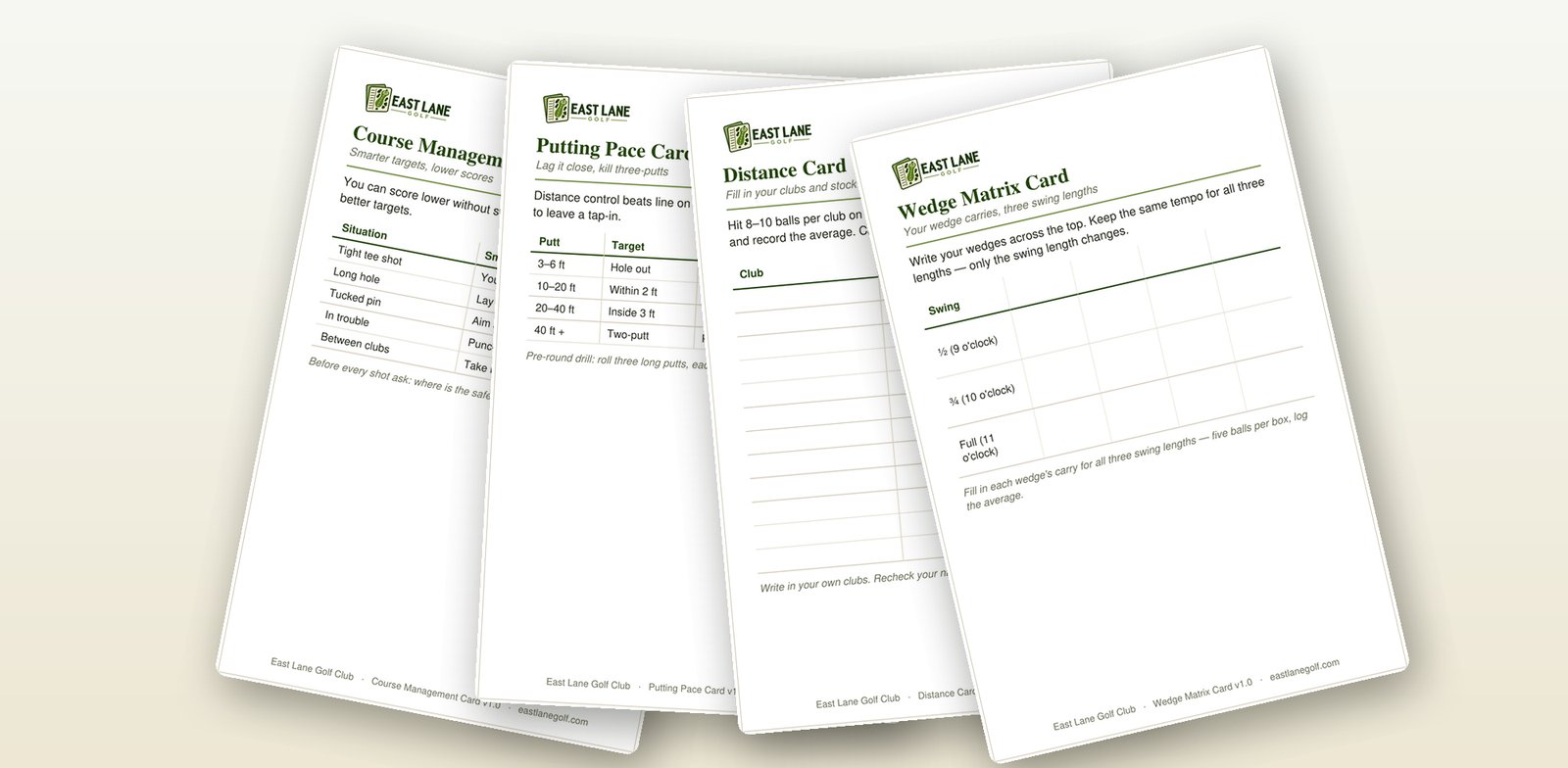
Thirty free, scorecard-sized cards. Each download gives you two identical copies on one A4 sheet — print at 100%, cut down the centre, and fold one into your bag. Take whatever helps.
Half the battle is simply knowing your real numbers. Once they're on a card, club choice stops being a guess and becomes a decision.
How to read it
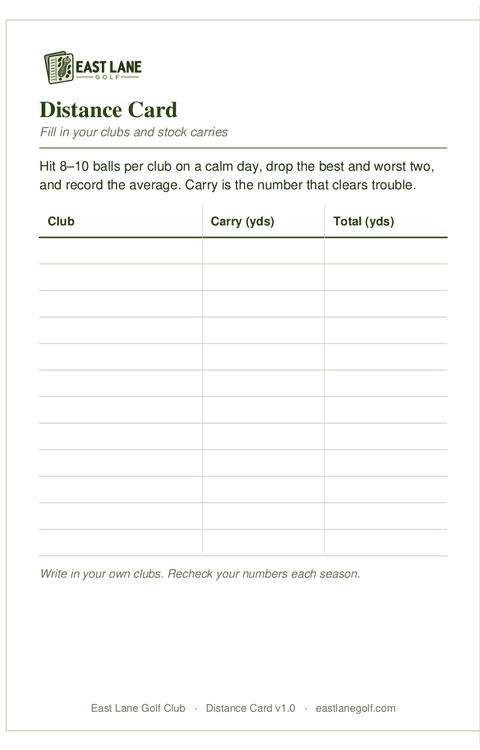
Each row is a club; the two columns show your average carry and your total with roll-out, so you can match the yardage in front of you to a club at a glance.
How to fill it in
Hit 8–10 shots per club on a launch monitor or a measured range, ignore your best and worst, and write down the average carry — the number you actually hit, not the one you dream about.
02Start here
Putting Pace Card
Lag putting fixes more three-putts than a better stroke ever will.
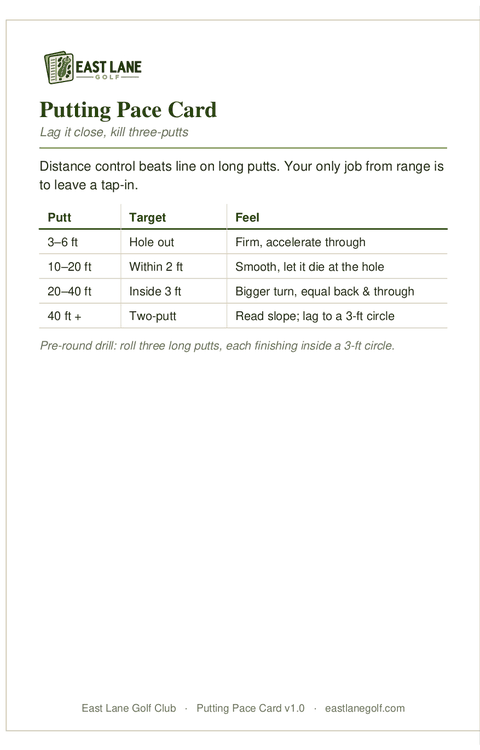
Three-putts are the quickest strokes to win back, and they're almost always about pace, not line. Get your speed right and the hole starts to feel a lot bigger.
How to read it
It gives you distance-control targets — how far past the hole to aim — so the long ones cosy up close instead of dying short.
How to fill it in
Add your own reference strokes from the practice green: how big a stroke sends the ball 10, 20 and 30 feet.
03Start here
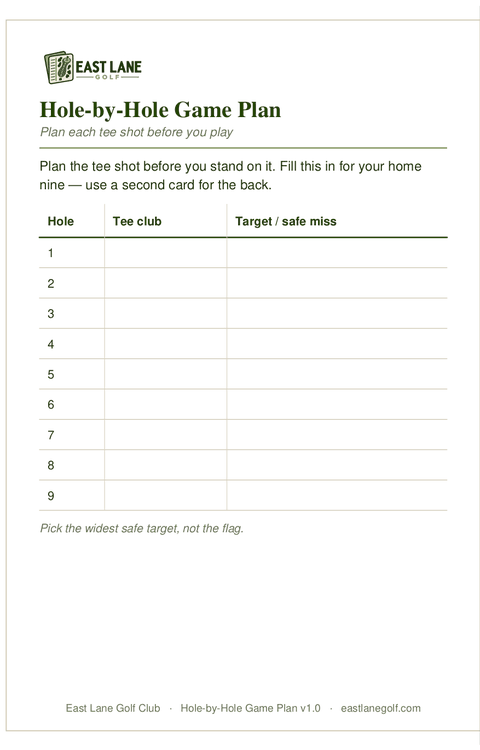
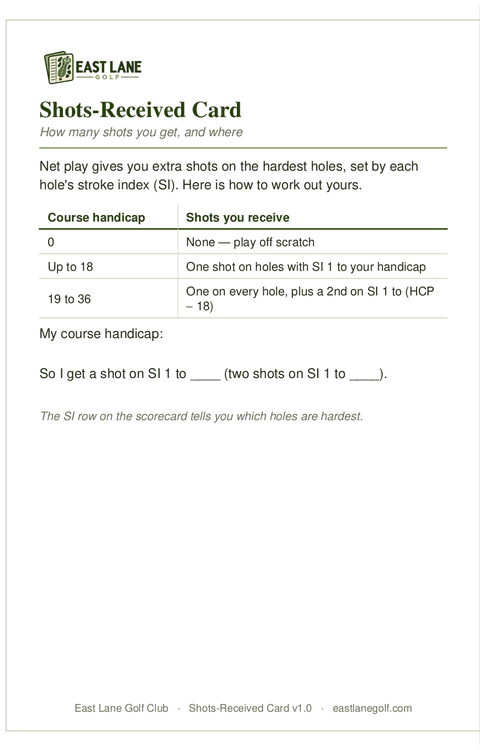
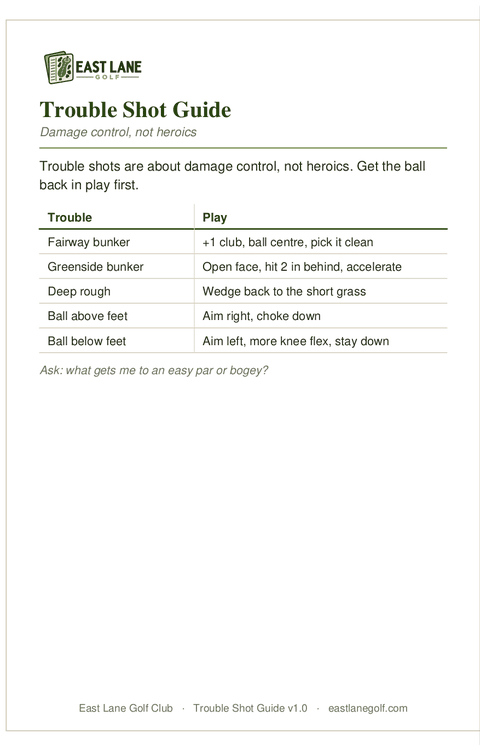
Course Management Card
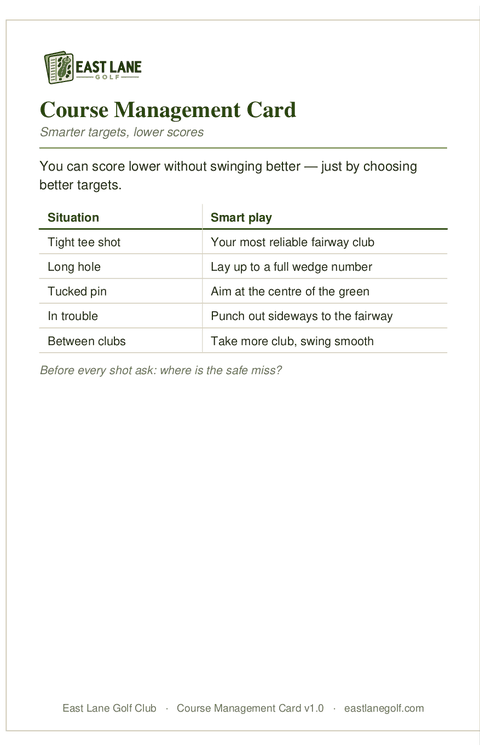
Shoot lower without swinging better, just by picking smarter targets.
No printer to hand, or want to see the numbers before you commit to paper? Enter your own carries or wedge swings and get a print-ready card back in seconds.
Half the battle is simply knowing your real numbers. Once they're on a card, club choice stops being a guess and becomes a decision.
How to read it
Each row is a club; the two columns show your average carry and your total with roll-out, so you can match the yardage in front of you to a club at a glance.
How to fill it in
Hit 8–10 shots per club on a launch monitor or a measured range, ignore your best and worst, and write down the average carry — the number you actually hit, not the one you dream about.
02
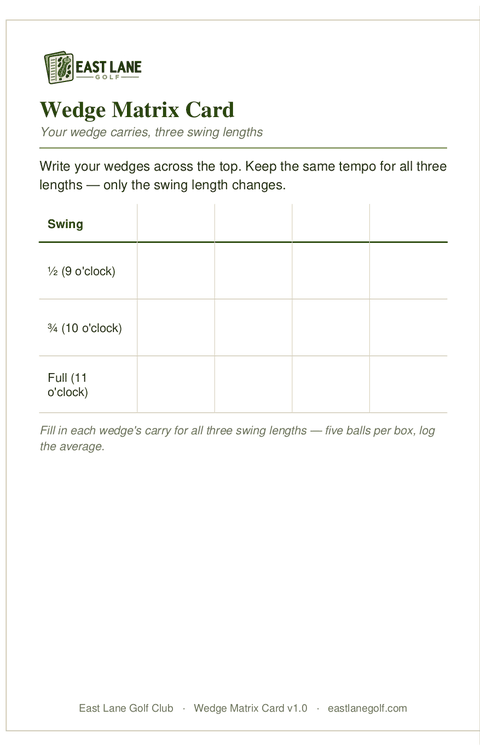
Wedge Matrix Card
Twelve reliable scoring distances from three swing lengths across four wedges.
So many shots land inside 120 yards, and that's exactly where most of us have the biggest gaps. Fill this in once and those awkward in-between numbers get a lot friendlier.
How to read it
Your wedges run across the top and three swing lengths (half, three-quarter, full) down the side; each square is the carry for that combination.
How to fill it in
Hit ten balls with each wedge at each swing length and note the average carry. That's it — you'll have a number you trust for almost any short approach.
03
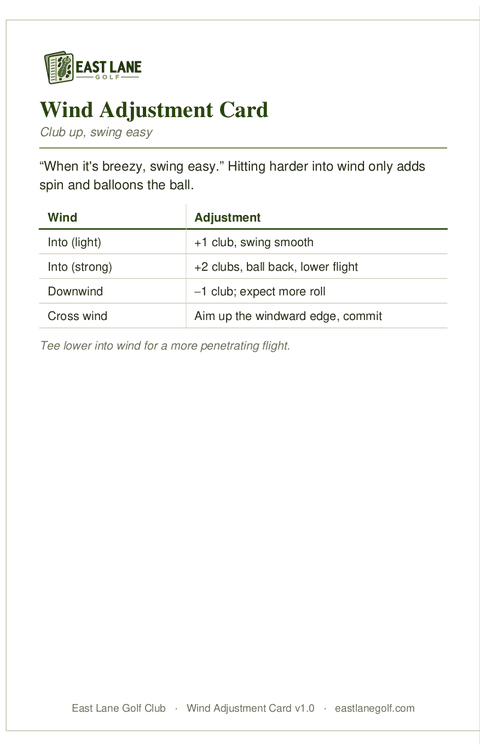
Wind Adjustment Card
Club up, swing easy, control the flight — rules of thumb for windy days.
Three-putts are the quickest strokes to win back, and they're almost always about pace, not line. Get your speed right and the hole starts to feel a lot bigger.
How to read it
It gives you distance-control targets — how far past the hole to aim — so the long ones cosy up close instead of dying short.
How to fill it in
Add your own reference strokes from the practice green: how big a stroke sends the ball 10, 20 and 30 feet.
06
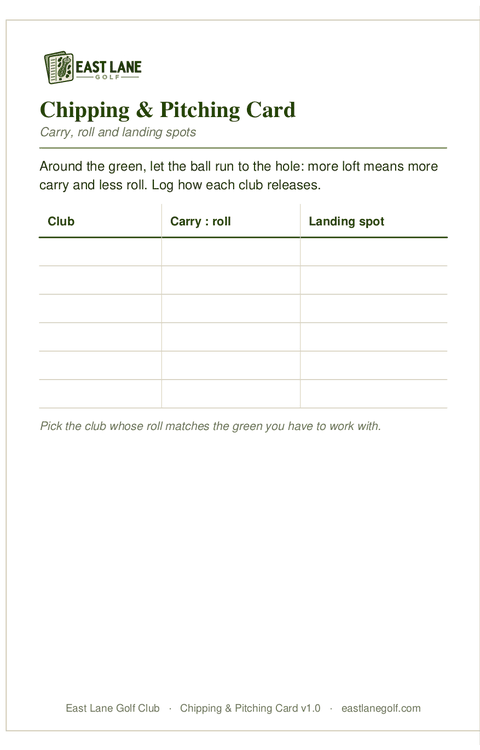
Chipping & Pitching Card
Log how each club carries and rolls so you pick the right one around the green.
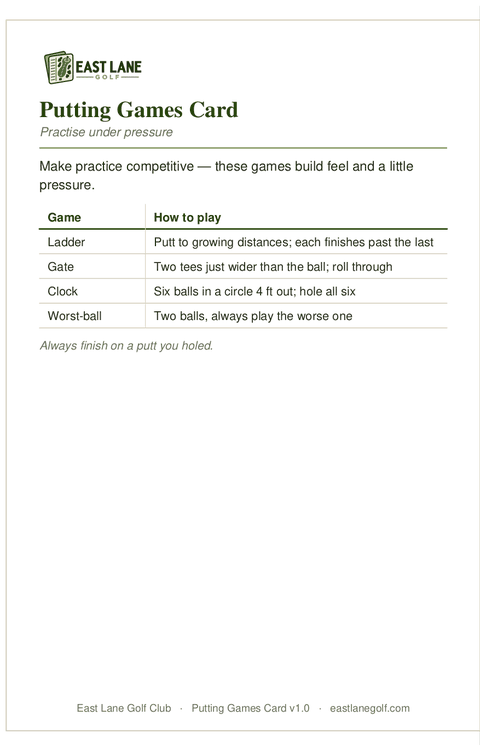
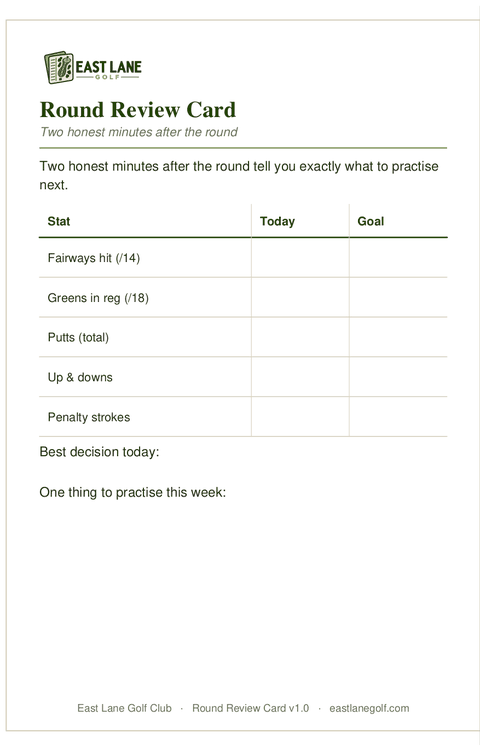
Rolling the same putt over and over feels productive but rarely sticks. Playing little games under a bit of pressure is what actually transfers to the course.
How to read it
Four drills — ladder, gate, clock and worst-ball — each with a simple way to keep score.
How to fill it in
Write down your score for each game and see if you can beat it next time out.
11
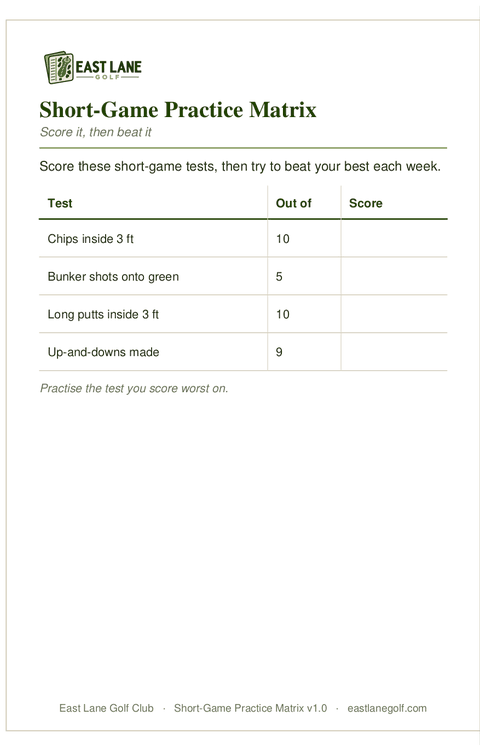
Short-Game Practice Matrix
Score four short-game tests and try to beat your best each week.
When practice has a score, you can see yourself improving instead of just hitting balls — and that little bit of measurement is surprisingly motivating.
How to read it
Four short-game tests, each with a box to score.
How to fill it in
Score each test, add them up, and log the total weekly to chase your best.
12Start here
Course Management Card
Shoot lower without swinging better by choosing smarter targets.
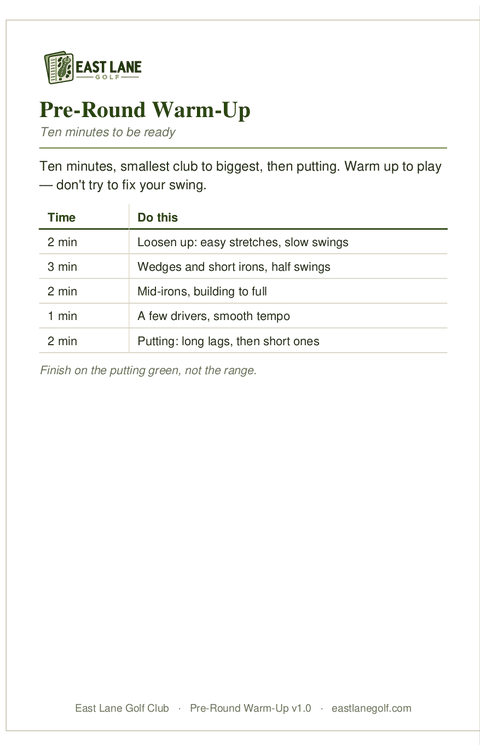
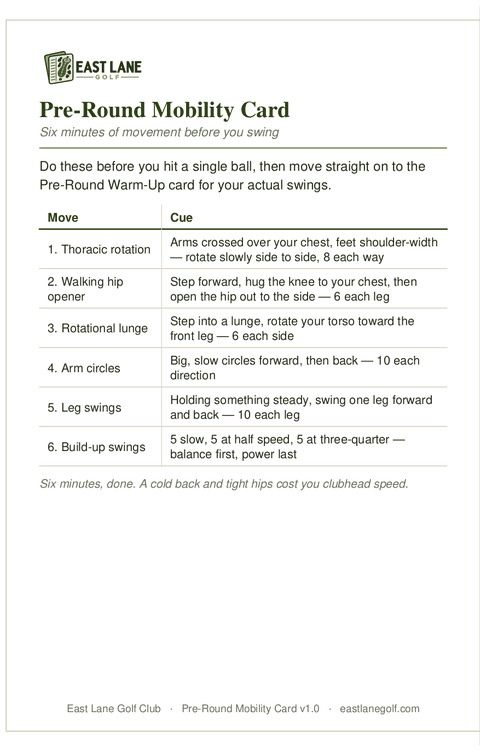
A cold back and tight hips cost you clubhead speed and make a strain more likely. Six minutes of movement before you swing a club gets your whole body ready to turn, not just your hands ready to hold one.
How to read it
Six moves in order, each with a quick cue and a rep count or time — no equipment needed, just a bit of space to move.
How to fill it in
Nothing to fill in — run through the six moves in order on your way from the car park to the range.
28
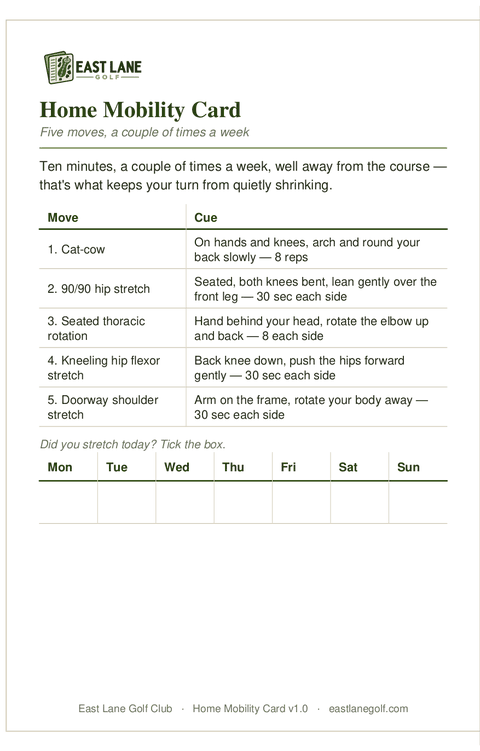
Home Mobility Card
Five simple moves for your hips, spine and shoulders — ten minutes, a couple of times a week, no golf swing required.
Most golf mobility problems don't show up on the course — they build up at a desk during the week. A few minutes of regular stretching keeps your turn from quietly shrinking between rounds.
How to read it
Five moves with a hold time or rep count each, plus a simple weekly tracker so you can see whether you're actually doing them.
How to fill it in
Tick a box each day you complete the routine, so your week is visible at a glance.
29
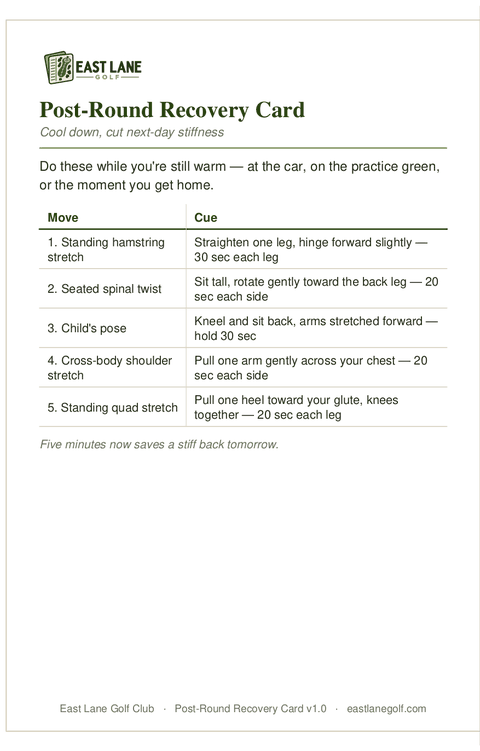
Post-Round Recovery Card
A short cool-down for your back, hips and shoulders to cut down on next-day stiffness.
Eighteen holes of one-sided rotation leaves your back and hips tight and uneven. A few minutes of cool-down stretching while you're still warm helps you walk normally the next morning.
How to read it
Five cool-down stretches in order, each with a hold time — do them at the car, on the practice green, or at home.
How to fill it in
Nothing to fill in — a reference card to run through straight after the round.
30
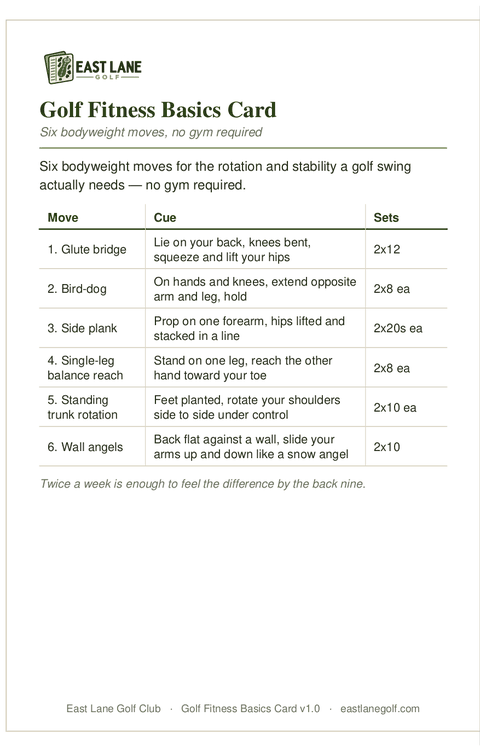
Golf Fitness Basics Card
Six simple bodyweight moves for rotational power and stability — no gym, no equipment.
You don't need a gym membership to turn more freely and stay steadier over the ball. A handful of bodyweight moves, done consistently, build the rotation and balance a golf swing actually needs.
How to read it
Six moves with a cue and a sets-and-reps target each — rotation, balance and strength, in that order.
How to fill it in
Log your sets and reps each session so you can see yourself progress.